
Most major magazine and fashion photographers have their own style for capturing their subjects - examples include David LaChappelle's colorful street photography, Herb Ritts' sensual black and white photographs, Helmut Newton's provocative's fashion spreads, and Mario Testino's polished images. Award winning photographer Annie Leibovitz's work, which spans over four decades, is moving, conventional, and at times contentious. It is not just that we need to see a pregnant and nude Demi Moore, a dazed Brian Wilson, or an unflattering portrait of a basketball player and supermodel. Leibovitz understands that these magazine covers and spreads are a major part of creating or destroying their public personas. She is a portraitist, but a commercial one. Like many other fashion photographers her work tends to strike a balance between having mass appeal, and leaving something for the reader to think about. Photographs have always been used as a method for crafting personal narratives for public figures, but with the rise celebrity culture these images have played a role in our canonization of popular actors and musicians.
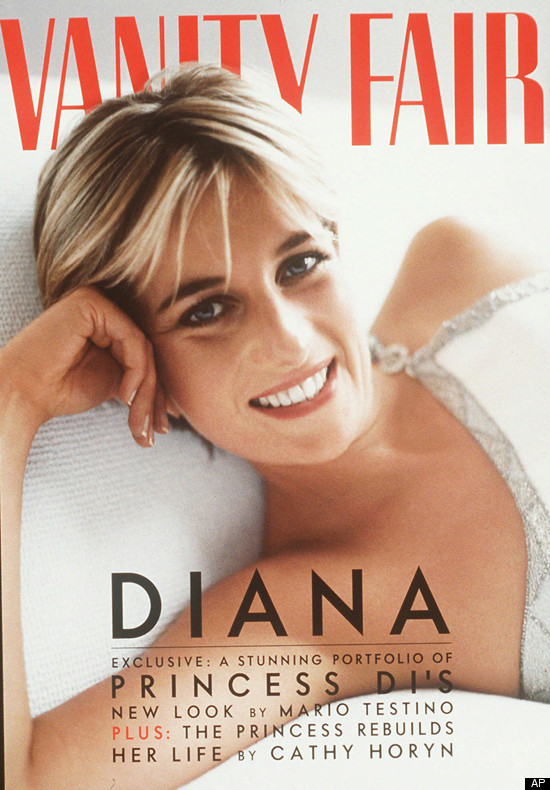
The image above, used for the January 1981 issue of Rolling Stone, is one of the most infamous photographs of the 20th century. In it, a nude John Lennon plants a kiss upon his wife Yoko Ono. The cover story was supposed to mark a return from his retirement, but hours after posing for the photo John Lennon would be murdered. According to Leibovitz, both her and Rolling Stone editor Jann Wenner insisted that Ono not be in the photo (1). The photo began as an act of defiance from Lennon, as he was well aware of the public's distaste for his wife. After his death the image became more of a tribute to his musical legacy and the nature of Lennon and Ono's relationship - raw, uncompromising, but loving. This photograph, along with other covers like Mario Testino's 1997 portrait of Princess Diana, has become ingrained in our memory. This is how we choose to remember these public figures, not as polarizing figures but as ethereal individuals. Thirty years later, Leibovitz' valuable work remains a prime example of how commercial photography plays a role in the development of an American collective memory.
Cited Sources
1. http://www.history.com/this-day-in-history/final-portrait-of-john-and-yoko-is-on-the-cover-of-rolling-stone
The image above, used for the January 1981 issue of Rolling Stone, is one of the most infamous photographs of the 20th century. In it, a nude John Lennon plants a kiss upon his wife Yoko Ono. The cover story was supposed to mark a return from his retirement, but hours after posing for the photo John Lennon would be murdered. According to Leibovitz, both her and Rolling Stone editor Jann Wenner insisted that Ono not be in the photo (1). The photo began as an act of defiance from Lennon, as he was well aware of the public's distaste for his wife. After his death the image became more of a tribute to his musical legacy and the nature of Lennon and Ono's relationship - raw, uncompromising, but loving. This photograph, along with other covers like Mario Testino's 1997 portrait of Princess Diana, has become ingrained in our memory. This is how we choose to remember these public figures, not as polarizing figures but as ethereal individuals. Thirty years later, Leibovitz' valuable work remains a prime example of how commercial photography plays a role in the development of an American collective memory.
Cited Sources
1. http://www.history.com/this-day-in-history/final-portrait-of-john-and-yoko-is-on-the-cover-of-rolling-stone


No comments:
Post a Comment